
Reading
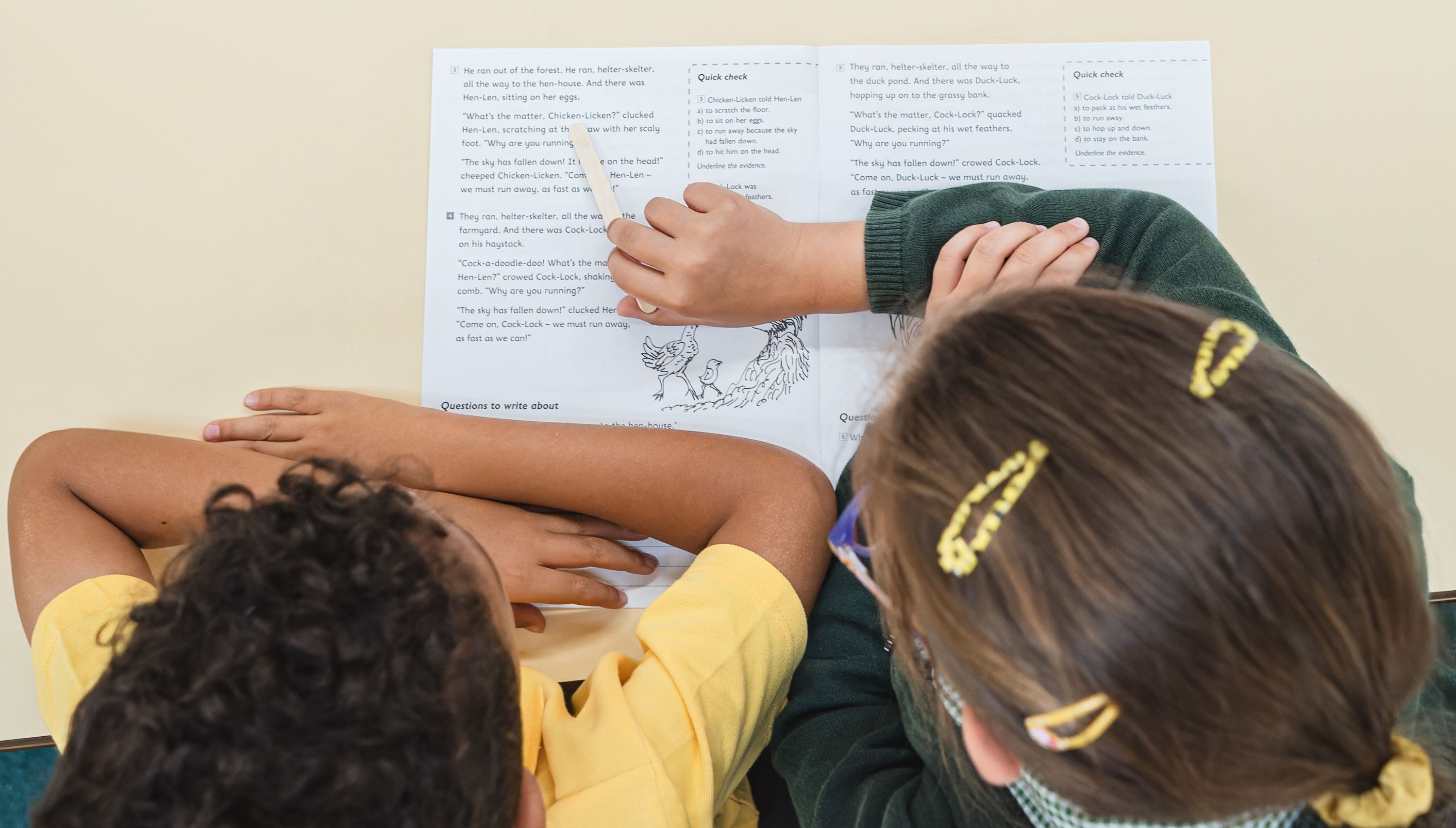
Reading feeds the imagination, it expands horizons and offers new and exciting ways of seeing and making sense of our lives and of the world around us.
Michael Morpurgo
Reading Curriculum Intent
At All Saints, we believe that all pupils should have the opportunity to become readers. This begins with them being taught the fundamental skills and knowledge of the alphabetic code through synthetic systematic phonics teaching. These skills allow all children, regardless of background, needs or abilities to learn to read. We aspire to help all children, including the weakest readers, make progress and meet age-related expectations. All-Saints School believes that synthetic systematic phonics teaching is the route for children to learn to read. We follow the Read Write Inc. programme from EYFS to Y2 (and beyond if a child needs more support in learning to read).
-
All Saints school expects children in Nursery to listen to and respond to sounds in their environment. As well as this, we share stories and rhymes daily with the children. In their final term of Nursery, children are introduced to the Set 1 single letter sounds and rehearse oral blending through ‘Fred Talk’ and ‘Fred Games’.
-
All Saints School expects children in Reception class: to know most of their Set 1 sounds (including Special Friends) and be able to blend orally, no later than the end of Term 2; to say the Set 1 sounds speedily and read CVC words (in Ditties) no later than the end of Term 3; to read CCVC and CVCC words (in Red Ditty Books) as well as Nonsense CVC words no later than the end of Term 4 and be able to ‘Fred Talk’ 4 or 5 sound words (Set 1, including Special Friends in Green Books), or 3 or 4 sound Nonsense words, no later than the end of Term 6.
-
All Saints School expects children in Year 1 to be able to read Purple Books no later than the end of Term 1; Pink Books no later than the end of Term 2 (able to read the first 6 Set 2 Sounds (ay ee igh ow oo oo) speedily and Fred Talk words which contain these sounds); Orange Books no later than the end of Term 3 (able to read all Set 2 Sounds and Green Word cards speedily and Fred Talk Nonsense words); Yellow Books no later than the end of Term 4 and Blue Books by the end of Term 6 (able to read the first 6 Set 3 sounds speedily (a-e, ea, i-e, o-e, u-e, oi), Green Word cards and Nonsense words as well as a passage at 60-70 words per minute, attempting intonation.
-
All Saints School expects children to have completed the RWI (Read, Write, Inc) programme no later than the end of Term 2 of Year 2. They will be able to read Grey Books (able to read all set 3 sounds speedily, Set 3 sounds in nonsense words with ‘Fred Talk' and a passage at 70-80 words per min attempting intonation).
-
It is expected that many children will reach some of these milestones earlier.
-
Handwriting and spelling is also taught through the Read Write Inc. programme.
All Saints School believes that following this progression of skills, all pupils can become successful readers and achieve the building blocks of resilience, confidence and knowledge necessary to enable them to become successful learners.
We want all children to be fluent and confident readers, who can successfully take meaning from a wide range of texts and develop their vocabulary through structured reading opportunities; incidentally, in free reading and through explicit teaching and modelling of new vocabulary. We want pupils to develop and share our love of reading. This includes having a good knowledge of a range of authors and being able to understand more about the world in which they live, through the knowledge they gain from texts, but also discussions about the books they have read and opportunities to share recommendations. By the end of their time at primary school, all children should be able to read fluently, and with confidence, in any subject in their forthcoming education. We are aspirational in terms of what children can achieve in reading, and we do not hold pre-conceptions about any pupils’ ability to make progress. We understand the importance of parents and carers in supporting their children to develop both word reading and comprehension skills, and so we have worked hard to develop a system where children have the opportunity to read books at home which develop their decoding and fluency (where needed) as well as developing their understanding through effective book talk, enhancing the skills we teach in school through good quality texts.
Phonics Teaching
In the Reception Class and Key Stage 1: Systematic, synthetic phonics is the first and foremost strategy for teaching reading and spelling. The daily teaching of Phonics will follow the teaching sequence set out in the Read Write Inc. programme.
During our phonics lessons, children work in progress groups, allowing us to whisk children through the stages. Teachers teach to the group’s challenge level, quickly identify children who need to move on, and provide extra support later in the day to the few who need more practice. For the first term in Reception, whole class teaching is used to teach new sounds with opportunities to practise reading and writing the sounds provided in a smaller group. Where children are assessed as unable to access whole class teaching initially, they will be given additional support and discussed with the Reading Lead and SENCo. From Term 2, the children will be placed into progress groups.
Teachers in Reception share the sounds they have taught each week on Google Classroom. This will include the mnemonic as well as a visual to support practice of letter formation. As soon as the children are secure in their Set 1 sounds and can ‘Fred talk’ CVC words, they begin to read ‘Ditties’, giving them an opportunity to confidently apply what they know and learn the structure of the Storybook sessions before progressing to Red Ditty books and beyond. The children take home a copy of the RWI book that the children have read in class, so that they can demonstrate their fluent reading and intonation (their ‘storytelling voice’) as well as a ‘Book Bag Book’, which gives the children the opportunity to apply what they have been learning to a new story at their challenge level.
Assessment in the Early Years is ongoing and children move groups as they progress. Termly, children who are having RWI teaching are assessed by the Reading Leader (or another trained Reading Teacher). This is to identify children who are making accelerated progress as well as those who might be falling behind. The assessments are used to inform the progress groups for the following term.
A tracking document is completed by the Reading Leader and shared with Reading Teachers and Class Teachers. This feeds into school data and is discussed in pupil progress meetings as well as informally through drop-ins. Tracking continues until the children have completed the RWI programme, regardless of their key stage.
Children, who are identified as falling behind, will receive additional support either through One to One (Fast Track tutoring) or by being identified as a spotlight child in their reading group. This intervention is in addition to our daily phonics teaching and is targeted to support each child in achieving their next step. The sessions are taught by skilled, trained practitioners.
Fidelity to the scheme outlined is understood to be highly important. All reading teachers are consistent in how they teach, the progression of skills and resources they use so that children’s experiences are built seamlessly and consistently on previous learning.
Phonics is the route to successful writing. Handwriting and spelling are linked to phonics teaching, with letter formation being taught at the same time as the graphemes learnt. Through phonics teaching, children are taught to write simple sentences and more by the end of Reception. They can master the spelling of phonically regular words and common exception words. Teachers pay good attention to children’s posture and pencil grip when children write. Children use pencils and exercise books while sitting at tables, to support good, controlled letter formation.
All Saints School takes professional development seriously. Internal training programmes are provided in phonics through practice sessions, peer coaching and mentoring, team teaching and observation. ECTs are supported by the Reading Leader and trained through the Ruth Miskin Portal. External experts are brought in when necessary.
Listening to children read
Children taking part in Read Write Inc. will read their phonics book 3 times as part of their Partner Practice. Whilst they are reading, their reading teacher will circulate to monitor and assess formatively (with spotlight children prioritised). This book is matched to their capabilities and ensures they develop accuracy, fluency and expression whilst reading. In addition to this, they will practice word reading every day.
Our chosen SSP (Read Write Inc.) ensures progression in both word reading skills and comprehension. The scheme is structured to ensure that children have access to a wide range of texts, and allows for pupils to develop their skills within a level before moving to the next level.
Learners who are working below age-related expectations will, beyond their phonics programme, read banded books that are carefully matched to their current stage of development. These books are changed weekly to encourage regular re-reading, supporting the development of fluency and automaticity. To ensure progress is closely monitored, fluency assessments are completed at least every two terms—at the end of Autumn 2, Spring 2, and Summer 2—providing clear evidence of growth and next steps in reading.
Additional support is provided for the lowest 20% of readers across the school to allow for accelerated progress in reading. This could be phonics intervention (One to One Tutoring: Fast Track), or through 1:1 reading, applying their decoding strategies.
We make sure that children who need extra support get regular 1:1 or small group reading time, whether they’ve fallen behind or simply don’t have the chance to practise as much at home.
Whole Class Reading and Book Club
We know the significance of reading aloud to children daily in helping them succeed as readers. Even from a young age, children love to hear language. When they are read aloud to, their imaginations are stimulated and their understanding of the world is broadened. It helps them develop their language and listening skills as well as understanding the importance of language. It is also an integral part of ‘sharing our love of reading’, as when we read aloud a range of good quality texts to children, we are promoting that love of reading. Through discussion of what we have read, we can address unknown vocabulary and model the reading process to children. The books we read daily, are high-quality texts and have been carefully chosen to explore a wide range of themes while reflecting the identities, experiences, and backgrounds of the children in our school.
This daily session, known as Book Club, aims to nurture reading for pleasure and purpose, build positive reading habits, broaden children’s exposure to different authors, genres, and text types, and create opportunities for them to recommend books to one another. During this time, we read and enjoy our carefully selected texts as a community of readers (in EYFS and Year 1, this is our opportunity to share and enjoy our Super Six books).
Throughout school, we use high-quality books to develop rich vocabulary, and to work on and develop skills such as predicting, sequencing events, making simple inferences, discussing characters’ feelings and motivations, and retelling stories in their own words. These experiences help build comprehension, deepen understanding, and nurture a love of reading from the very beginning. Reading lessons in Key Stage 1 and 2 are fully integrated into our English curriculum, ensuring that reading is not taught in isolation but embedded within every unit of learning. Throughout each English unit, children take part in purposeful moments designed to immerse them in rich, engaging texts, including both the main text driver and a range of high-quality supplementary texts. Within these sessions, key reading skills are explicitly taught, modelled, scaffolded and practised so that pupils develop confidence and independence as readers. Fluency is also strengthened through approaches such as echo reading, choral reading, repeated reading, performance reading and targeted fluency exercises, enabling children to read with increasing accuracy, pace and expression.
Vocabulary Teaching
We are very aware of the importance of vocabulary and know that being ‘word poor’ has negative consequences for our children in later life. This is why we ensure that we are providing many opportunities to promote and develop vocabulary: through rich structured talk and writing; teaching vocabulary explicitly across the curriculum through a range of approaches; providing structured opportunities to read and also opportunities to read for pleasure. We display and model vocabulary (across the curriculum) to reinforce the vocabulary that has been taught.
Supporting learners with SEND
At All Saints School the Reading curriculum is ambitious and designed to give all pupils, particularly disadvantaged pupils and including pupils with SEN and/or disabilities, the knowledge and cultural capital they need to succeed in life. We know that those who learn to read are more successful across the whole curriculum and in later life. We use strategies from the NASEN guidance to support our scaffolding within our teaching of Reading. This includes, but is not limited to the following list;
-
Enlarging print or using different coloured paper/overlays
-
Fast Track intervention support where children require additional practice for learning speed sounds and/or becoming fluent readers
-
Resources provided for children to practice at home – including video links and word cards
-
Additional opportunities to read 1:1
-
Clear and consistent phonic displays in all classrooms for children to use in their learning to support reading and writing
-
Individual sound mats and phonic prompts
Home/School Collaboration
All pupils have a Reading Diary, which they are encouraged to record their reading in regularly. Parents and carers are asked to support by adding comments to the Reading Diaries to indicate how children have read from Early Years to Year 3. The children from Years 4-6 are expected to record in their Reading Diary independently to form a dialogue about the books they have read with their teacher.
Children who are still on the RWI programme are provided with a copy of the book that they have been reading in class, matched to their phonics level, this is changed and sent home along with another book to apply their phonics. The books are changed once a week. We encourage children to read their books repeatedly so that they become more familiar with them, consequently developing fluency and hearing themselves as readers.
As well as their phonics books, they will be provided with a Book Talk book. This book is shared at home and intended to develop their comprehension skills through effective book talk. This enhances the skills we teach in school at home.
Once children have completed RWI, they will take home a banded reading book each week until they are assessed as ready to become a free reader.
Impact
-
Children will be able to successfully decode words, using their knowledge of phonics and tricky words.
-
Children will learn to read fluently as quickly as possible.
-
At least 90% of children will meet the National Expectation in the Phonics Screening Check.
-
Children working on the RWI programme will make progress in line with or exceeding the programme’s expectations.
-
Children from Y2 onwards will be able to read age appropriate books.
-
Lowest attaining readers are identified quickly and provided with targeted intervention to make rapid progress.
-
Children will enjoy reading across a range of genres.
-
Children of all abilities will be able to succeed in all reading lessons.
-
Children will have a good knowledge of a range of authors.
-
Children will be ready to read in any subject in their forthcoming education.
-
Parents and carers will have a good understanding of how they can support reading and home. In Early Years and Years 1 to 3 they comment in Reading Diaries, providing a dialogue between home and school. In Years 4-6, the children and teacher have a shared dialogue in reading diaries about the books that are read.
-
The % of pupils working at ARE within each year group will be at least in line with national averages.
-
The % of pupils working at Greater Depth within each year group will be at least in line with national averages.
-
There will be no significant gaps in the progress of different groups of pupils (e.g. disadvantaged vs non-disadvantaged).
How can I support my child at home?
-
Listen to your child read. If they come across an unknown word, encourage your child to look for special friends, Fred talk, read the word.
-
Talk to your child about the story they are reading, discuss, and show them how they could use a ‘storyteller voice’.
-
Enjoy time sharing stories together. Read with enthusiasm to your child.
-
Use a wide range of vocabulary, practice using new vocabulary from the book they are reading in everyday situations throughout the day.
Letter Formation Videos
Please follow this link for helpful letter formation videos www.youtube.com/@uptoninfantschoolletterfor2792/videos
Parents guide to Read, Write, Inc
Please follow this link to a parents guide to our Read, Write, Inc program: